

Screen Innovations Screens
Screen Innovations (SI) has changed how people think about projection screens. Their ambient light rejecting (ALR) technology makes projectors viable in rooms that were previously considered too bright — living rooms with windows, media rooms with overhead lighting, and multipurpose spaces where full blackout isn't practical. If you've ever been told "projectors only work in dark rooms," SI screens are the counterargument.
Products
Screen Innovations offers over a dozen screen materials optimized for different lighting conditions and use cases. These six are the most popular choices for home theater and media rooms. SI also offers Unity (1.0 gain reference), Short Throw (UST ALR), and more — contact us for guidance on the right material for your room.
Screen Innovations offers screens for every installation scenario — from frameless fixed designs to ultra-compact motorized systems and 4-way masking. All screens are made to order in Austin, TX.
Black Diamond Fusion
SI’s flagship ALR material. Rejects up to 85% of ambient light while delivering reference-quality color and contrast. Rigid panel construction for maximum optical performance. The ultimate choice for bright rooms where image quality cannot be compromised.
Black Diamond
The original ALR screen that started it all in 2008 — still described by SI as the highest-performing ALR screen on the market. Rigid panel construction delivers the absolute best ambient light rejection for premium dedicated theaters and media rooms.
Slate
Flexible ALR material with 1.2 gain that can go massive — up to 375″ seamless in the XL variant. Three years of lab development produced a material with excellent light uniformity, minimal hot-spotting, and strict visual acuity standards. A more accessible ALR option for large-format installations.
Slate AT
The acoustically transparent version of Slate — combining ALR performance with sound transmission for speakers behind the screen. Center channel dialogue originates directly from the image of the actor on screen. A rare combination of ambient light rejection and acoustic transparency.
Pure
SI’s reference screen material for light-controlled rooms. Proprietary micro-texture that is 9 times finer and smoother than standard white and gray materials, future-proof for resolutions up to 8K and beyond. Available in Pure White and Pure Gray variants.
Pure AT
The acoustically transparent version of Pure — the best of both worlds for image and sound. Micro-perforated with the same 9x finer texture as Pure, delivering peerless image uniformity and remarkably sharp reproduction while allowing sound to pass through for behind-screen speaker placement.
About
Screen Innovations pioneered the ambient light rejecting category — manufacturing in Austin, TX since 2003 — and has since expanded to a full range of materials and screen types. Their screens are designed to look as good retracted as they do deployed: clean, minimal, and architecturally thoughtful. From frameless Zero Edge designs to ultra-compact Solo motorized cassettes, SI brings projection into spaces where traditional screens couldn't go.
TekScene is an authorized Screen Innovations dealer serving the Columbia, SC area. We help you choose between SI's screen materials and form factors based on your room conditions, projector brightness, and installation requirements. Whether you need an ALR screen for a bright living room or a reference screen for a dedicated theater, we handle specification, ordering, and professional installation across the Columbia area — Chapin, Lexington, Irmo, West Columbia, and Lake Murray.
Acoustic Transparency
Screen Innovations uses micro-perforation technology for their acoustically transparent (AT) materials. Tiny, precisely spaced holes allow sound to pass through the screen so speakers can be placed directly behind the viewing surface — putting dialogue exactly where the actor's mouth is on screen.
Screen Innovations uses micro-perforation technology for their acoustically transparent (AT) materials. Tiny, precisely spaced holes allow sound to pass through the screen so speakers can be placed directly behind the viewing surface — putting dialogue exactly where the actor's mouth is on screen.
Micro-Perforation
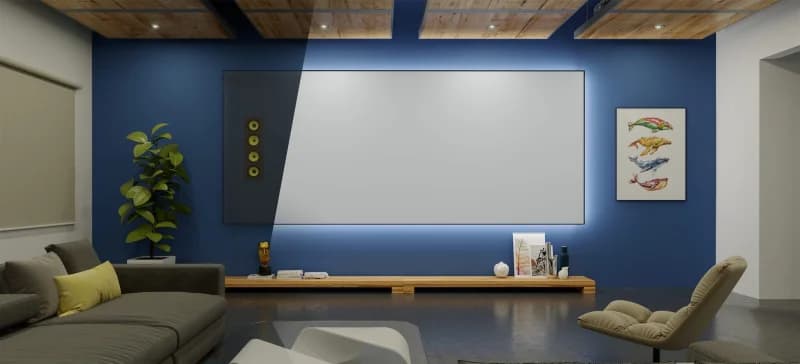
SI's AT materials — Pure AT, Slate AT, and Unity AT — use micro-perforations small enough to be invisible at normal viewing distances. Unlike woven acoustic screens, micro-perforated materials maintain the full optical properties of the base material, preserving image sharpness and gain while allowing sound transmission. The perforations are engineered to minimize any impact on resolution, even at 4K and above.
ALR + AT: Slate AT
Slate AT is particularly noteworthy as it combines ambient light rejection with acoustic transparency — a technically challenging combination. This means you can place speakers behind the screen in a room with ambient light and still get both ALR performance and proper sound staging. Few manufacturers offer this combination.
Screen Innovations offers screens for every installation scenario — from frameless fixed designs to ultra-compact motorized systems and 4-way masking. All screens are made to order in Austin, TX.
Screen Types
Screen Innovations offers screens for every installation scenario — from frameless fixed designs to ultra-compact motorized systems and 4-way masking. All screens are made to order in Austin, TX.

Zero Edge (Frameless Fixed)
SI's signature frameless design — the screen appears to float on the wall with no visible frame. Seamless integration into any room aesthetic. Available with all SI materials including Black Diamond and Slate ALR options.
Zero Edge • Zero Edge Pro • Fixed 2″ • 1 Fixed
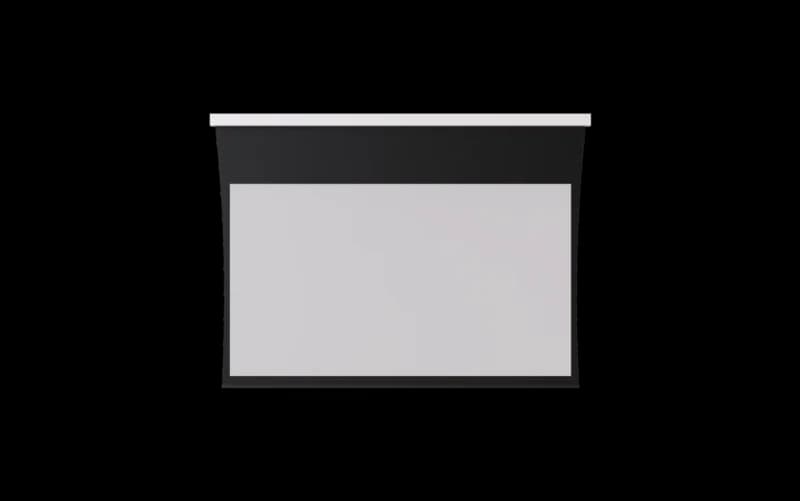
Solo (Motorized)
Ultra-compact motorized cassettes — the Solo Pro 2 fits a 160″ screen in a cassette under 4.75″ tall. Available in 12 designer colors with built-in control. Indoor and outdoor models. The screen disappears completely when retracted.
Solo 3 Indoor • Solo 3 Outdoor • Solo Pro 2 • 5 Motorized

DT Dynamic (Masking)
Motorized masking systems that eliminate black bars by adjusting to any aspect ratio. Available in 1-way, 2-way (side or top/bottom), and full 4-way configurations. From compact home cinemas to large auditoriums.
DT Dynamic 1 • DT Dynamic 2S • DT Dynamic 2TB • DT Dynamic 4
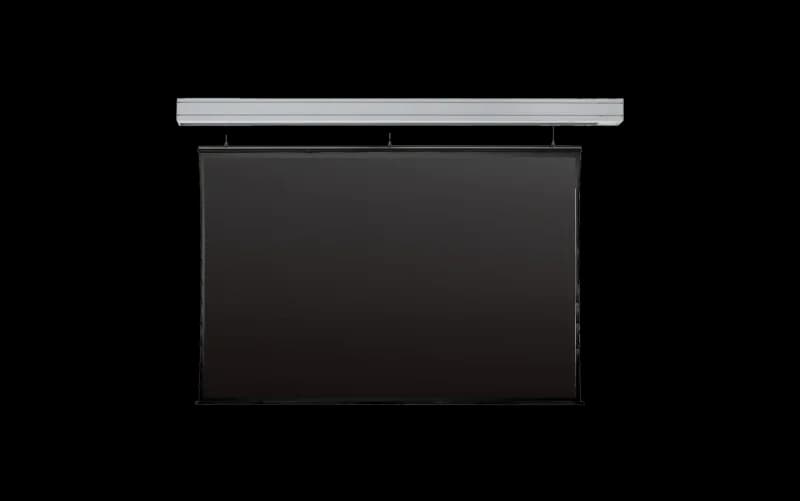
Zero-G (Levitating)
A cable-suspended motorized screen that appears to float when deployed and disappears completely when retracted. Up to 300″ diagonal in the Pro model. SI calls it a "Rollable Television" — a unique form factor for dramatic presentation spaces.
Zero-G • Zero-G Pro
Why Buy Screen Innovations Through TekScene
- ALR material expertise — Ambient light rejecting screens require careful matching to your projector’s brightness, throw angle, and your room’s light sources. We assess your space and recommend the right SI material to maximize image quality in your specific conditions.
- Professional motorized screen installation — Motorized screens involve structural mounting, electrical wiring, and control integration. We handle ceiling recessed, wall-mounted, and surface-mounted installations with clean, hidden wiring and reliable trigger or control system integration.
- Complete projection system design — We pair your SI screen with the right projector, ensure proper throw distance and lens shift, and optimize the image for your chosen screen material. The screen and projector are designed as a matched system, not separate purchases.
- Authorized dealer, local support — Full manufacturer warranty through an authorized channel. Based in Chapin, SC, we’re here for installation, motor service, control system integration, and any adjustments over time.
Frequently Asked Questions
How do I choose a screen material?
The decision is driven by the light in the room rather than the badge on the frame, and we walk through it in full under how to choose a screen material.
What is specific to Screen Innovations is the emphasis. They built the ambient light rejecting category and have pushed hardest on materials for rooms that are not dark, along with mounting formats — frameless, motorized, masking — that suit rooms doing more than one job. If your room has windows and another purpose, that is usually the shortlist you end up on.
Tell us the room and what you watch in it, and we will narrow it to two or three materials.
What does ambient light rejecting actually do — and can I stop worrying about light?
It helps enormously, and no, not entirely.
An ALR material is engineered to reflect light coming from above and to the sides — lamps, windows, ceiling fixtures — away from your eyes, while returning the projector's light along the axis you are sitting on. That is why it holds contrast in a room where a white screen would look washed out and gray. It is the problem Screen Innovations built the company around.
What it cannot do is reject light arriving from the same direction as the projector, or undo light landing on your walls and ceiling and bouncing back. For what to do about the light you can control — and why a dark ceiling does more than most people expect — see how much ambient light matters.
Fixed frame or motorized?
Fixed frame if the room can spare the wall, motorized if it cannot.
A fixed screen is tensioned permanently on its frame, so it is flat, stays flat, and has no mechanism to fail. In a dedicated room it is the obvious choice, and a frameless design keeps the wall visually quiet when nothing is playing.
Motorised makes sense in a room that has another life — a living room where the screen should disappear, or where the wall carries a television or artwork the rest of the time. Modern tensioned motorized screens are far flatter than the roll-up screens people remember, though a fixed screen still has the edge on absolute flatness.
The practical questions are usually where the case can be concealed, whether there is power and control at that point, and how the screen should be triggered. All easier decided before the walls close than after.
Do I need an acoustically transparent screen?
Only if you want the speakers behind it, which in a dedicated theater is worth wanting.
Putting the front three speakers behind the screen puts dialogue where the actor's mouth is, rather than above or below the picture, and frees the whole wall for the image. In a purpose-built room that is the arrangement to aim at.
The cost is a small loss of light through the material and the need to account for it in the projector and the setup, so it is not free. In a room where the speakers are going beside the screen anyway, an acoustically transparent material buys you nothing.
There is a full explanation of how the materials achieve it, and what to watch for, further up this page.
What size screen should I get?
Work back from where people sit rather than forward from a number.
What determines whether a picture feels right is the angle it fills in your vision, which depends on size and seating distance together. The film industry works in angles for exactly this reason — a screen that is superb at twelve feet is unremarkable at twenty. Our screen size comparator does the arithmetic and shows the standards side by side.
Then let the room impose its limits: ceiling height, where the projector can go and what it can throw, speaker positions, and whether a wider scope shape suits what you watch. Those usually decide the final number more than preference does.
Should I choose Screen Innovations or Stewart Filmscreen?
We carry both and have no reason to push you either way, so the honest answer is that it depends on the room rather than the badge.
Both make excellent materials and both manufacture their own fabrics. Where they differ is emphasis. Screen Innovations built its reputation on ambient light rejection and has pushed hardest on materials for rooms that are not dark, along with mounting formats — frameless, motorized, masking — that suit rooms doing more than one job. Stewart's reputation comes from reference-grade material science and the certified, industry-standard materials used in professional screening rooms.
In a bright or multi-purpose room, that tends to favor one; in a dedicated, fully light-controlled theater, the other. But the overlap is real and both have answers in both directions.
See the Stewart Filmscreen range for the equivalent materials.
Do you install the screen?
Almost always, yes — as part of the wider project. A screen is not really a separate purchase: its size, position and material depend on the projector, the throw distance, the seating and the light in the room, and getting those wrong is expensive to undo. When we quote a system, installation is part of it.
For a screen on its own, it depends on the scope of the job and we will talk it through with you. Either way the conversation starts the same place — the room, the projector and where people sit.
Interested in Screen Innovations? Let’s Talk About Your Project.
From an ALR screen for your living room to a motorized masking system for a dedicated theater, we’ll help you find the right Screen Innovations solution.
More from TekScene
Related Brands