

JTR Speakers
Horn-loaded loudspeakers and Captivator subwoofers, built in Baltic birch for rooms that need real output without strain.
Products
Showing 24 of 24 products
Home Entertainment — Kallos
Slim on-wall and in-wall speakers, 4.25 inches deep, horn-loaded like the rest of the line and rated up to 123 dB usable output — as much at home in a small dedicated room as in a living room. A sealed 12-inch subwoofer rounds out the family.
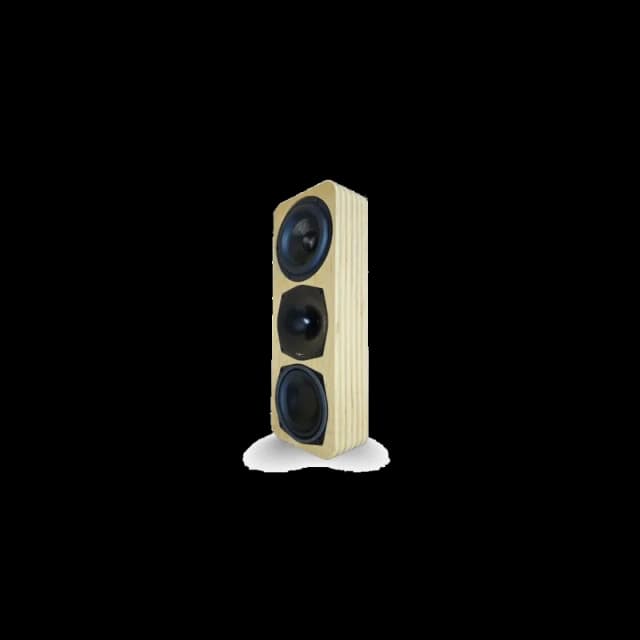
Kallos 265
Premium 2-way on-wall loudspeaker with a rotatable 90 x 60 horn, so the coverage pattern follows the speaker whether it is mounted upright or on its side.
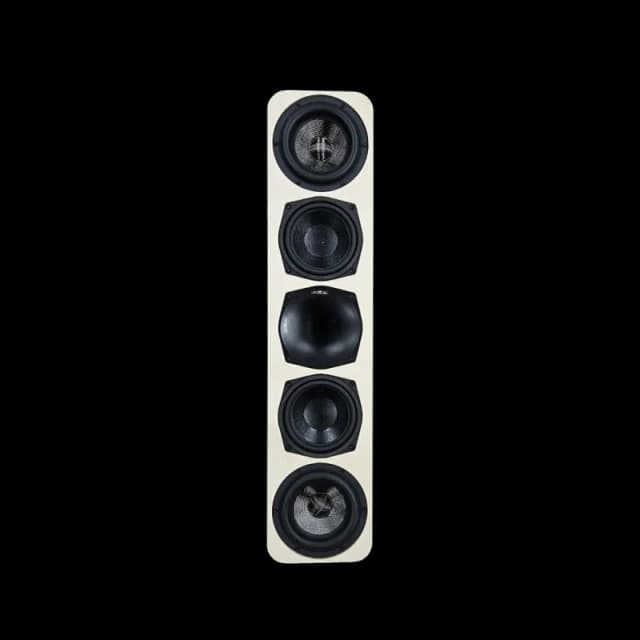
Kallos 465
The larger on-wall Kallos: the same rotatable 90 x 60 horn, 6 dB more sensitive than the 265 and rated 6 dB higher in usable output at 123 dB — four times the power delivered, from the same 4.25-inch depth.
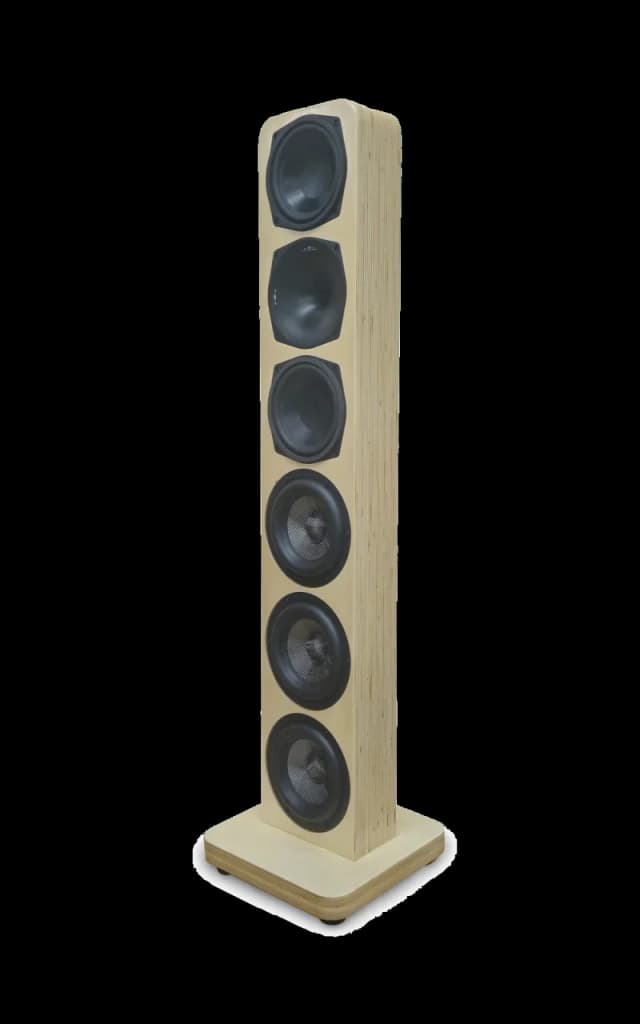
Kallos 465FS
Floor-standing version of the 465 on a compact 11.5" square base, for rooms where there is no wall to mount to but no space for a full tower either.
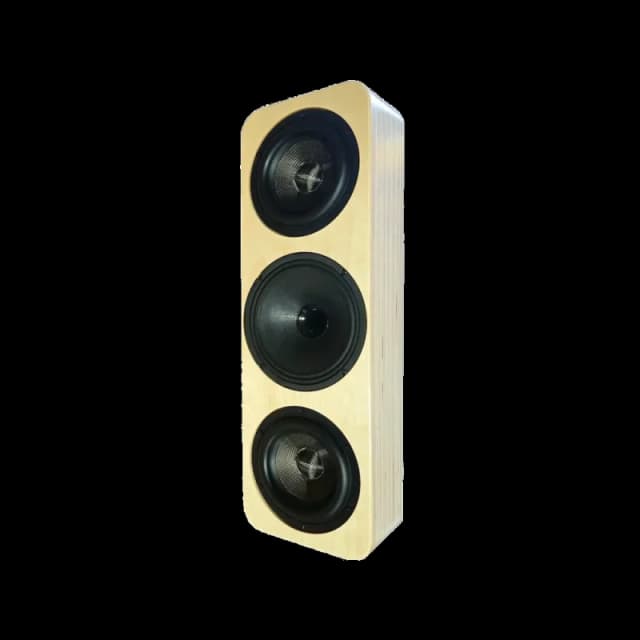
Kallos 38
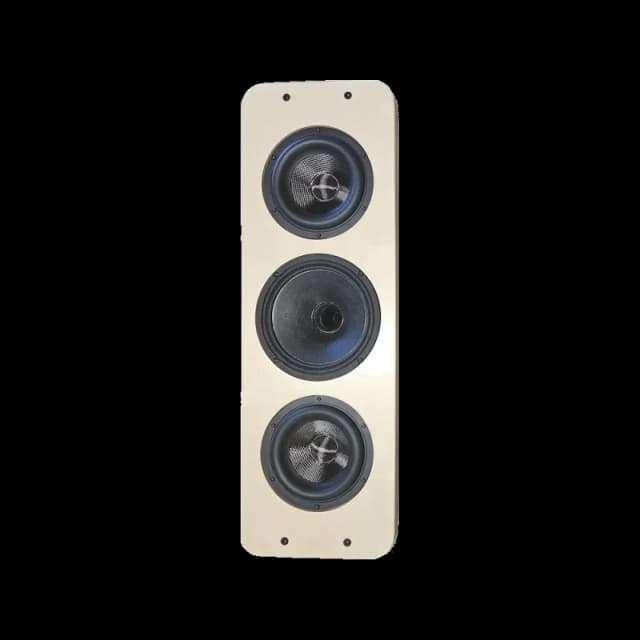
Premium 2-way on-wall loudspeaker with a 90-degree conical horn — a wider, more even pattern than the 265 for rooms with seating spread across the width.
Kallos 38IW
In-wall version of the 38, with the same 90-degree conical horn in a sealed back box so performance does not depend on what is behind the drywall.
Kallos 12Sub
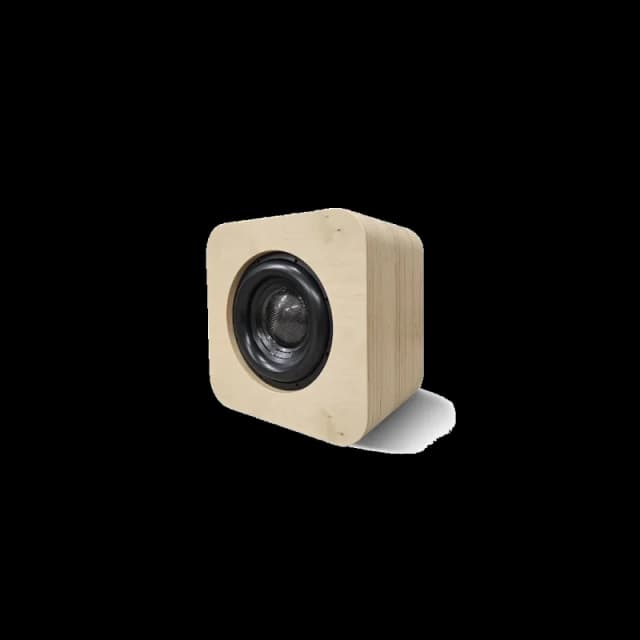
Sealed 12-inch subwoofer with a 2000-watt DSP-optimized amplifier, front-firing throughout so it can be placed tight to a wall or inside cabinetry.
Home Theater — Noesis
Horn-loaded speakers for dedicated rooms, from the compact 110HT surround to the full-range 215RT.
Noesis 110HT
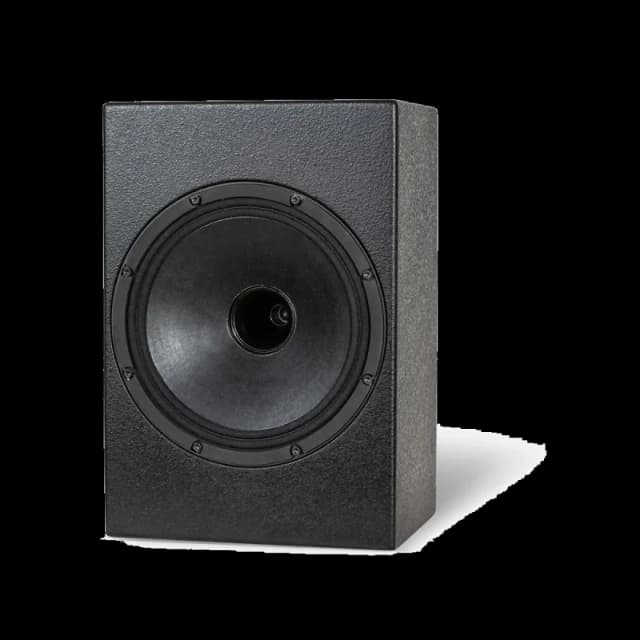
2-way audiophile loudspeaker built around a 10-inch coaxial midrange with a 1-inch compression driver behind an acoustically transparent dust cover. The compact Noesis, and the usual surround choice.

Noesis 110HT-SL
The 110HT in a slanted cabinet, for mounting high on a wall or in a ceiling soffit where the speaker needs to aim down at the seats.
Noesis 110HT-IW
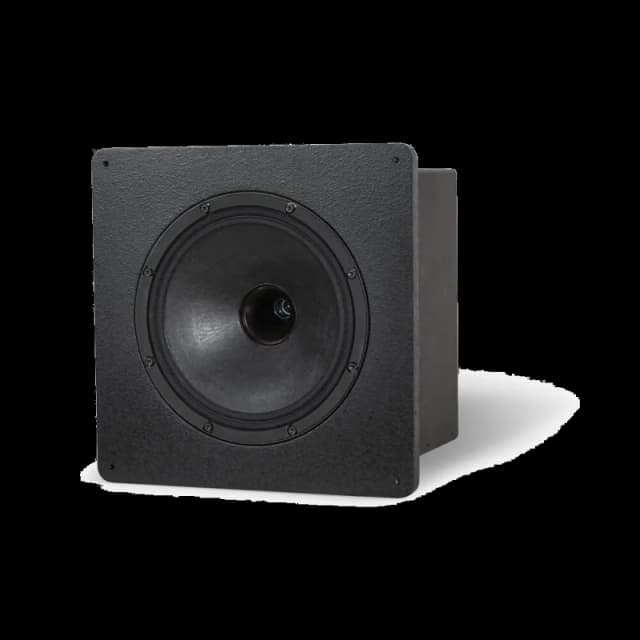
In-wall version of the 110HT, for surround and height positions where nothing can protrude into the room.
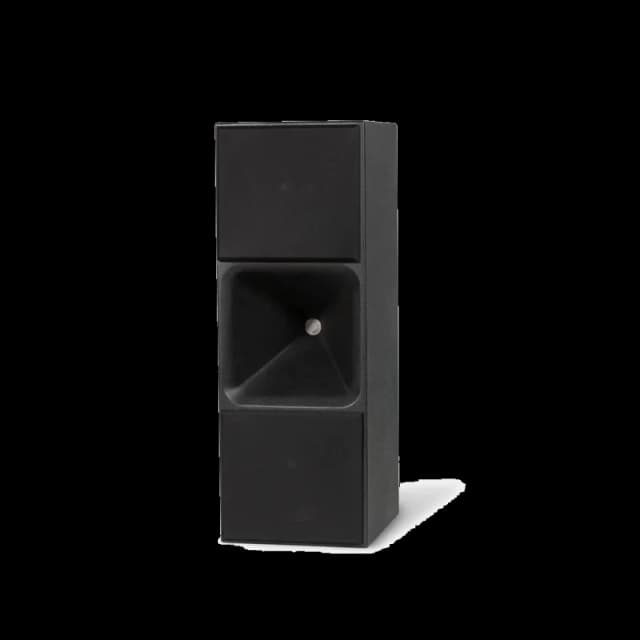
Noesis 210HT
2-way loudspeaker with two 10-inch woofers in a sealed enclosure and a compression driver on a large wooden horn with a 60 x 60 pattern.
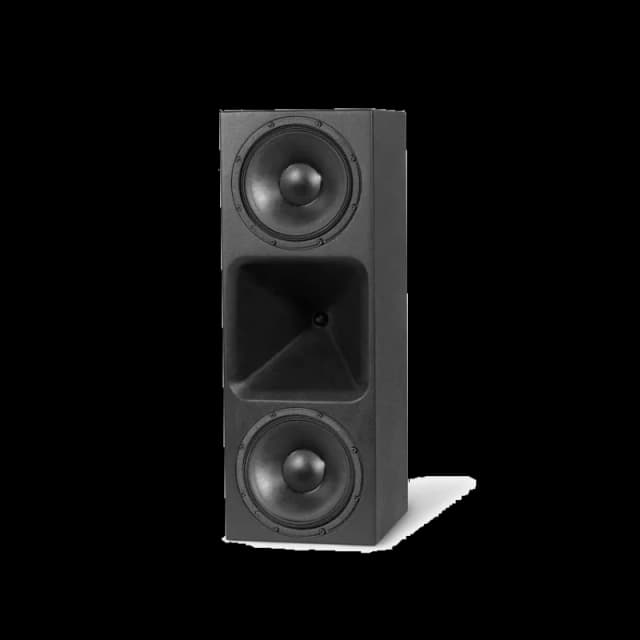
Noesis 210RM
Reference Monitor: the sealed 210 cabinet upgraded to a 3-way design with an ultra-high-end coaxial compression driver, extending the top end to 24 kHz.
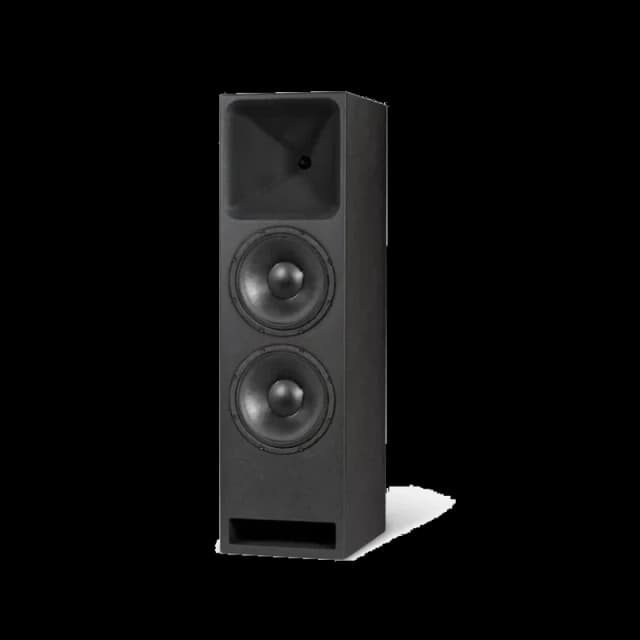
Noesis 210RT
Reference Tower version of the 210RM — the same 3-way coaxial design in a vented enclosure, which takes the low end from 60 Hz down to 38 Hz.
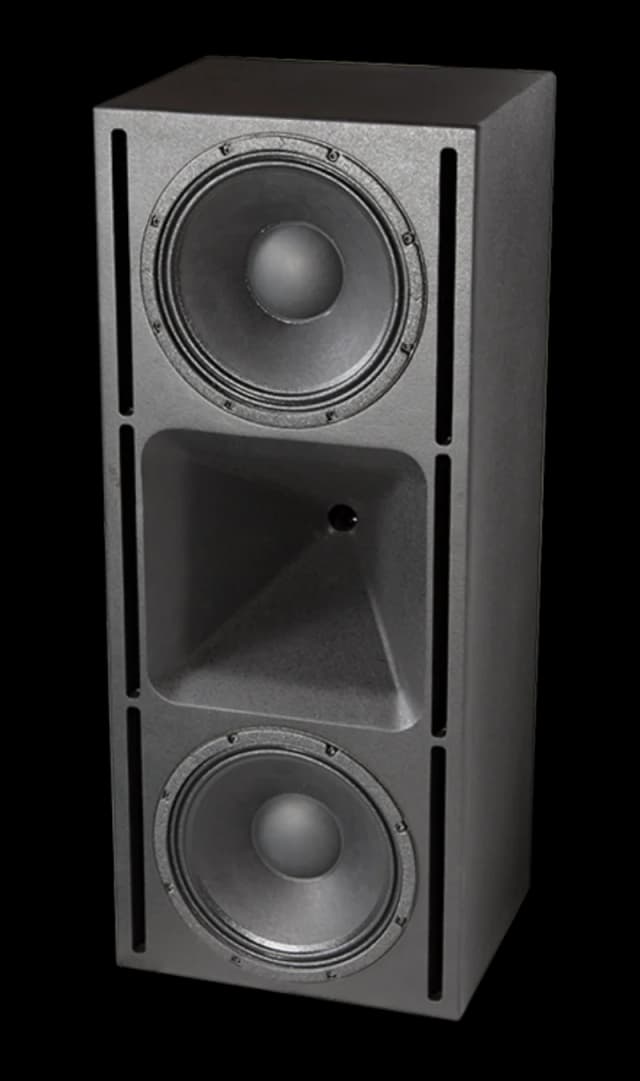
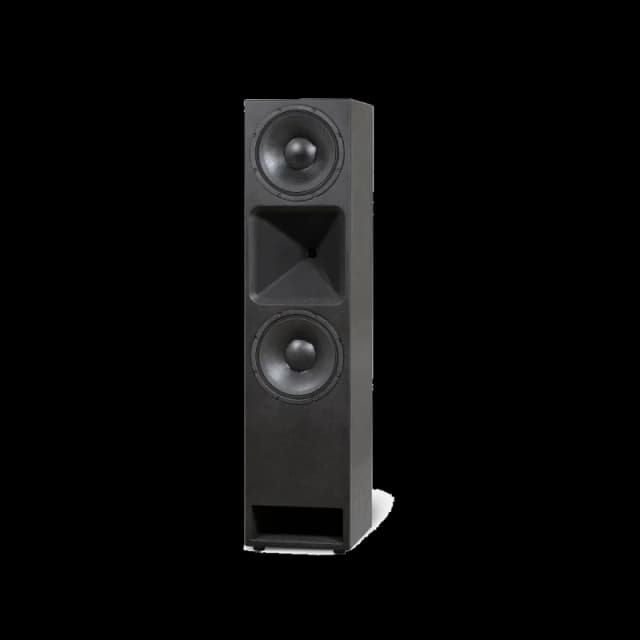
Noesis 212HTR
3-way loudspeaker with two 12-inch woofers in a vented enclosure and an ultra-high-end coaxial compression driver on a 60 x 60 wooden horn. 101 dB sensitivity puts it 6 dB ahead of the 210 family.
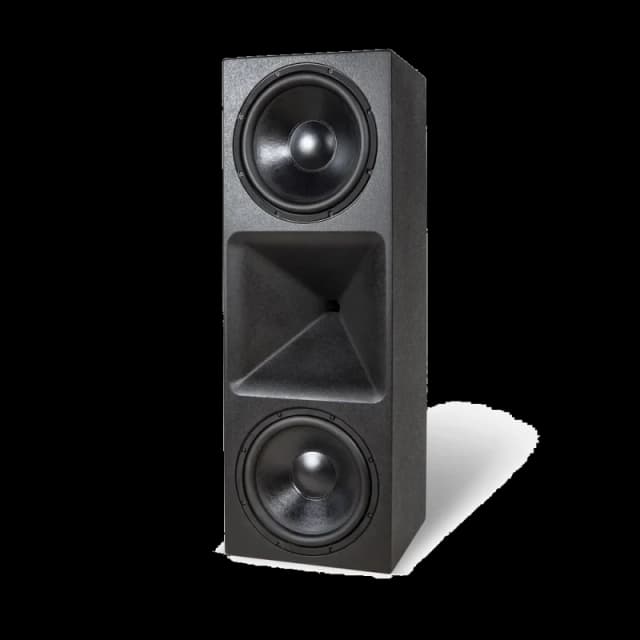
Noesis 212RT
Floor-standing version of the 212HTR, with the extra cabinet volume taking usable response down to 35 Hz.
Noesis 215RM
Reference Monitor with two 15-inch woofers in a sealed enclosure and a coaxial compression driver on a wider 70 x 70 horn, reaching 32 Hz free air before the room contributes anything.
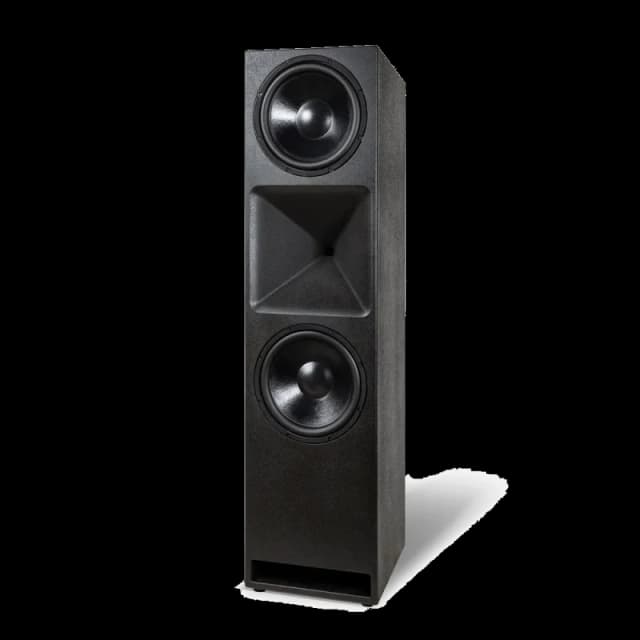
Noesis 215RT
Reference Tower: two 15-inch woofers in a vented enclosure with the 70 x 70 coaxial horn, rated to 18 Hz. The largest Noesis, and a genuinely full-range speaker.
Home Theater — Captivator Subwoofers
Sealed RS models for tighter spaces, and the ported ULF models — ultra low frequency — where the bottom octave matters most.
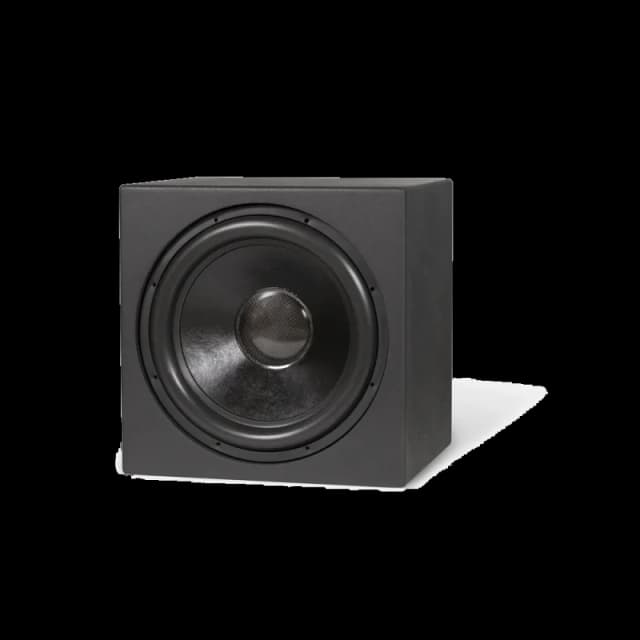
Captivator RS1
Sealed subwoofer with an 18-inch driver and a 2400-watt DSP-optimized amplifier. The smallest Captivator cabinet, and the easiest one to place.
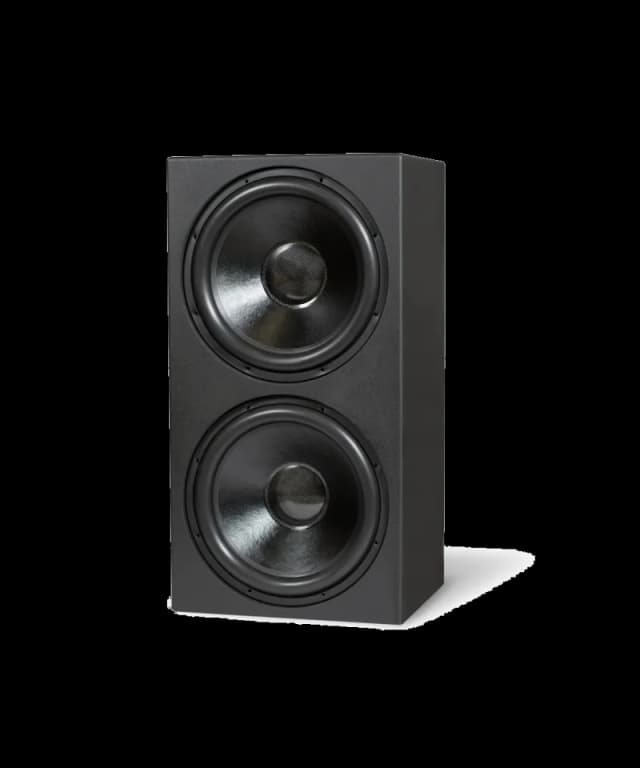
Captivator RS2
Sealed subwoofer with two 18-inch drivers and a 4000-watt amplifier — the RS1's output doubled in a single taller cabinet.
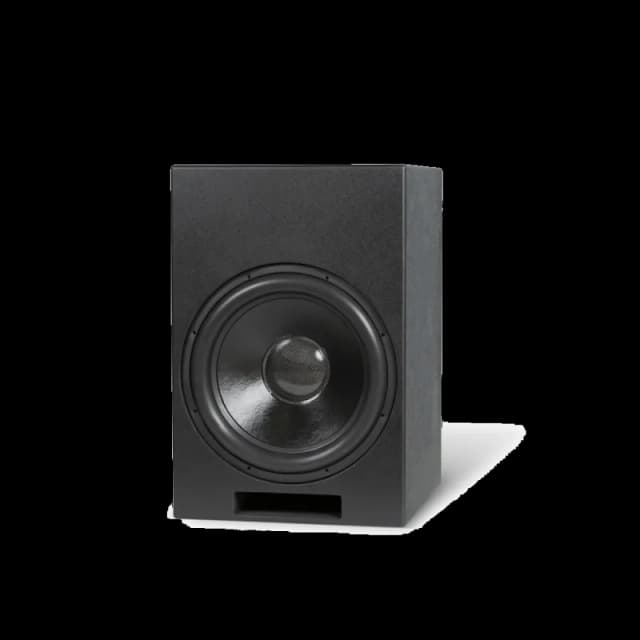
Captivator 2400
Bass reflex subwoofer with an 18-inch driver and a 2400-watt amplifier with full DSP. Ported tuning takes the bottom end to 12 Hz.
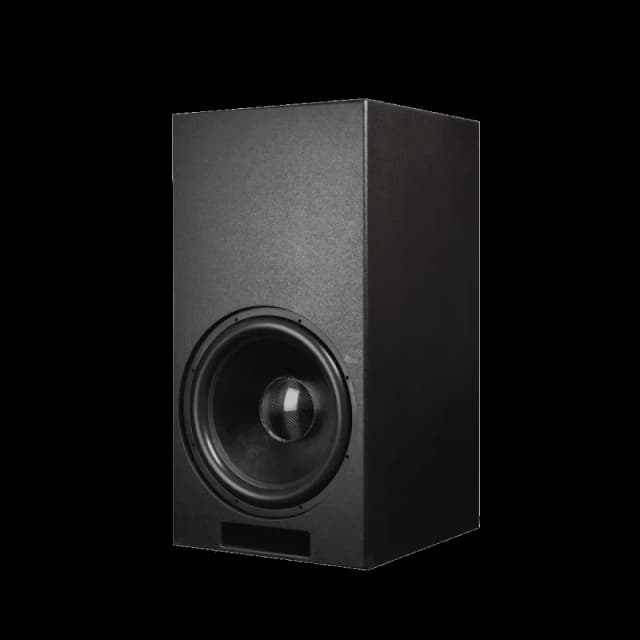
Captivator 2400ULF
The 2400 in a larger ULF cabinet — same driver and amplifier, more volume behind it.
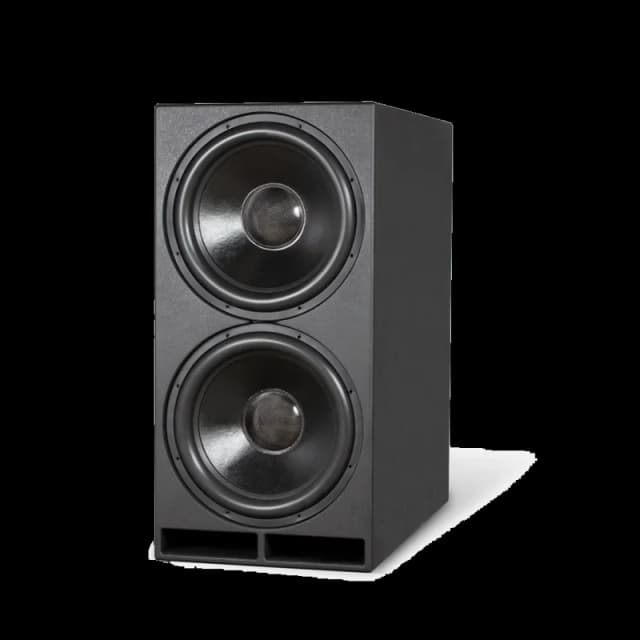
Captivator 4000ULF
Bass reflex subwoofer with two 18-inch drivers and a 4000-watt DSP amplifier, rated to 10.5 Hz. The reference Captivator.
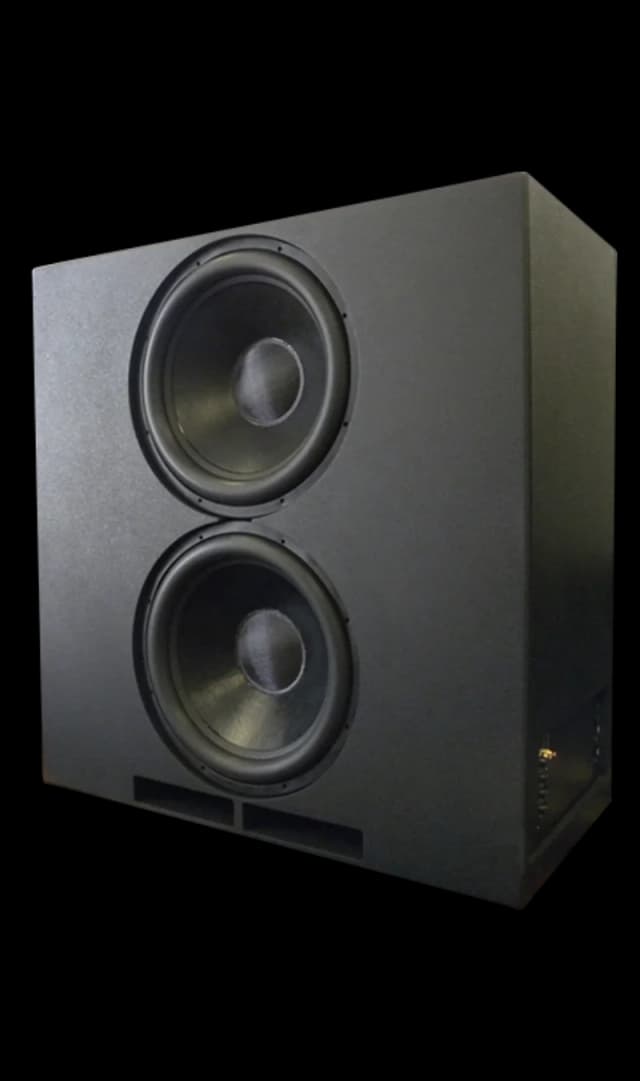
Captivator 4000ULF-LP
The 4000ULF in a low-profile cabinet — identical drivers, amplifier and response, laid out to sit under a riser or screen wall.

Captivator 4000TL
The 4000ULF in a tall, narrow cabinet, for rooms where floor area is scarcer than height.
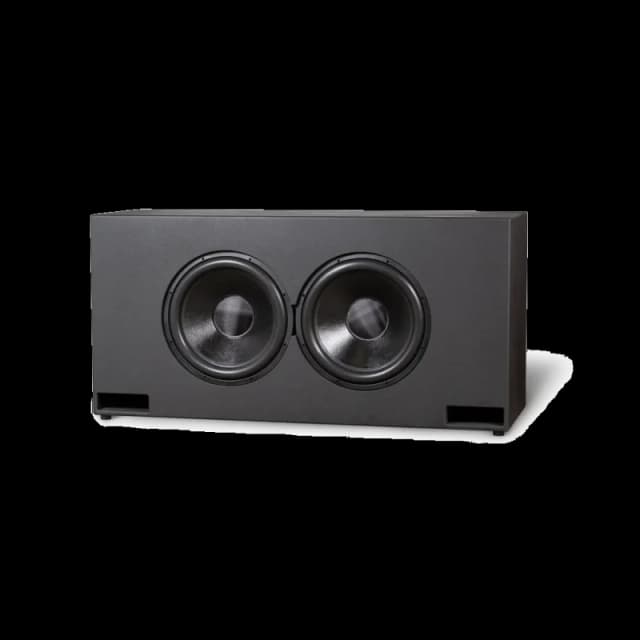
Captivator 4000ST
The 4000ULF laid out wide and low — the same cabinet volume as the TL, turned on its side for behind-the-seating or under-screen placement.
About
JTR Speakers is a small American manufacturer, and it builds in Landrum, up in the South Carolina foothills. The company came out of professional cinema and touring sound and still sells into both — the home models are that engineering brought down to domestic scale. It is also an unusually direct operation: cabinets are built to order rather than pulled off a warehouse shelf, and in place of a support queue, JTR's own contact page sends customers to the AVS Forum and AVNirvana, where the company answers questions in public. The warranty runs five years on cabinets and drivers, and three on subwoofer amplifiers.
The engineering is easy enough to describe: compression drivers on large wooden horns, and cabinets cut from void-free Baltic birch rather than MDF. The horn does two jobs at once — it controls where the sound goes, and it makes the driver far more efficient. The result is sensitivity most home speakers never approach: 95 dB is ordinary across the Noesis line, and the 212HTR reaches 101 dB.
Sensitivity is a ratio, and the arithmetic compounds quickly. Every 3 dB is half the amplifier power for the same loudness, so a 101 dB speaker needs roughly a twentieth of what a typical 88 dB tower draws to play just as loud. What that buys is not volume — it is margin. The drivers travel a fraction as far at any given level, so distortion stays low where an ordinary speaker is already straining. The voice coils stay cool, so a long loud passage does not quietly shed a decibel to thermal compression halfway through. And a transient sitting 20 dB above the average, a gunshot or a slammed door, has somewhere to go instead of clipping.
The Captivator subwoofers answer a different question. Below roughly 80 Hz, output is a matter of moving air rather than efficiency, so the answer there is cone area and control — 18-inch drivers with DSP-managed amplification — and how deep they actually play depends as much on the room as on the cabinet. Which is where we come in. TekScene is an authorized JTR Speakers dealer: a South Carolina brand, fitted by a South Carolina installer. We design and install JTR systems for homeowners across the Columbia area — Chapin, Lexington, Irmo, West Columbia, and Lake Murray.
Why Buy JTR Speakers Through TekScene
- Expert selection — we match the model to the room's size, seating layout and acoustics rather than selling up the line by default.
- Professional installation and integration — mounting, aiming, amplifier matching, crossover and level setting, all handled as one job.
- Complete system design — speakers, subwoofers, amplification, processing and room correction specified together, so nothing is the weak link.
- Local support — we are in South Carolina, and a system we installed is a system we can come back to.
Frequently Asked Questions
Should I be looking at Kallos or Noesis?
Less a question of serious versus casual than of how much room you are willing to give up. Kallos is the shallow line — 4.25 inches deep on the wall, or fully recessed with the 38IW — and it is a genuine performer: the 465 is 97 dB sensitive and rated at 123 dB usable output, which is more than a small or medium dedicated room will ever ask of it. Mounted flat to the front wall it also hands back the floor a tower would have taken, and in a small theater that is often the binding constraint.
Noesis goes further, and it goes lower. The 212HTR is rated 134 dB usable, and the 215RT plays to 18 Hz — in cabinets that are furniture-scale, the 215RT standing 70 inches tall and shipping at 236 pounds. That headroom earns its keep in a large dedicated room run at reference level. It earns much less in a small one where the seats are ten feet from the speakers.
So: a large dedicated room, or one where you want reference level without leaning on subwoofers, points to Noesis. A smaller dedicated room, a media room, or any space where the speakers cannot project into the floor points to Kallos — and not as a consolation.
Do horn-loaded speakers sound harsh?
The reputation comes from older horn designs, and it is not what a modern compression driver on a properly shaped waveguide does. The point of the horn is controlled directivity — the speaker sends its output at the seats in a defined pattern (60 x 60 across most of the Noesis line, 70 x 70 on the 215 models, 90 x 60 on the Kallos) instead of spraying it at the side walls. Less reflected sound arriving late is usually heard as more clarity, not less.
It is a different presentation, though, and worth being honest about: controlled directivity means aiming matters. A JTR pointed at the back wall rather than the seats will not sound the way it should, which is a large part of what installation is for.
Can JTR speakers work in a normal living room?
The Kallos line can, comfortably. On-wall at 4.25 inches deep is shallower than most people expect, the 38IW disappears into the wall entirely, and the 12Sub is front-firing throughout so it can sit tight against a wall or inside cabinetry without choking.
The Noesis line is a harder sell outside a dedicated room, and we would rather say so than talk you into it. Matte black cabinets with large visible horns are not discreet, and the 212 and 215 models are big. If the speakers have to recede visually, start with Kallos.
Sealed or ported — what is the difference between the Captivator RS1 and the 2400?
Both use an 18-inch driver and a 2400-watt amplifier, so the driver and power are not the variable. The RS1 is sealed and measures 21 inches wide, 18 deep and 21 tall, rated to 22 Hz outdoors with room gain taking it lower. The 2400 is ported, rated to 12 Hz, and considerably larger at 20 wide, 22.5 deep and 30 tall.
The ported cabinet gives you more output in the bottom octave, which is where the very lowest film effects live. The sealed cabinet is smaller, easier to place, and in a typical room the difference is smaller than the specifications suggest once room gain is included. If the room is large or the goal is the bottom octave at volume, the ported models earn their size; otherwise the RS1 is usually the easier decision to live with.
What is the difference between the 4000ULF, 4000ULF-LP, 4000TL and 4000ST?
Not in these four — though the question is a fair one, because normally cabinet shape and volume would matter a great deal.
What sets a subwoofer's sound is its net internal volume and its tuning, and these four share both, along with the same pair of 18-inch drivers, the same 4000-watt DSP amplifier and the same published response of 10.5–125 Hz. The external dimensions are a rearrangement rather than a redesign: in inches, width by depth by height, the 4000ULF is 20.5 x 39.5 x 41 and the LP is the same three figures reordered at 39.5 x 20.5 x 41, while the TL is 20.5 x 28 x 58 against the ST at 58 x 20.5 x 28. Work the volumes out and all four land within a third of a percent of each other, about 19 cubic feet in every case.
The things a cabinet's shape does change — internal standing waves, baffle diffraction — occur at wavelengths far shorter than a subwoofer is ever asked to reproduce. At 125 Hz a wavelength is about nine feet; at 20 Hz it is over fifty. The box is acoustically small at those frequencies whichever way up it stands.
Where the shape genuinely does change what you hear is where it lets you put the subwoofer — and that effect is far larger than anything happening inside the cabinet. An LP tucked under a riser, a TL standing in a corner and an ST lying behind the seats will measure very differently in the same room, because below 125 Hz the room dominates. So it is a placement decision rather than a performance one, with the caveat that placement is among the most consequential acoustic decisions in the whole system — which is why it is worth modeling with the Subwoofer Placement Calculator rather than guessing.
How many subwoofers do I actually need?
More than one, in almost every room. A single subwoofer can reach reference level easily — a Captivator 4000ULF will not run out of output in a domestic room — but output is not the problem multiple subwoofers solve. Room modes make bass loud at one seat and thin at the next, and no amount of power from a single location fixes that. Two subwoofers placed well usually cut seat-to-seat variation dramatically; four gets closer still.
You can model this before buying anything with our Subwoofer Placement Calculator, which shows how sub and seating positions interact and compares bass consistency across the seats.
Do JTR speakers need a separate power amplifier?
They are passive, so the power has to come from somewhere, and the general recommendation is a dedicated amplifier rather than a receiver. Most of the line is 4 ohms, and a receiver's advertised power is measured into 8 ohms with only two channels driven — with every channel working there is far less available per channel than the number on the box suggests.
The exceptions are real, though. Surround and height speakers sit close to the seats, and halving the distance quarters the power needed, so a receiver drives those comfortably — the 110 family included. The 212HTR and 212RT are efficient enough to be easy anywhere in the room. And any of these speakers will play normal listening levels on a receiver quite happily; it is reference level in a larger room, on the less sensitive models, where an amplifier stops being optional.
Will Dirac Live work with JTR subwoofers?
Yes. Room correction runs in the receiver or processor, not in the subwoofer, so any Captivator works with Dirac Live exactly as any other subwoofer would. The subwoofer's own DSP handles its response; Dirac handles the room.
One thing to plan for early: Dirac Live Active Room Treatment addresses each subwoofer independently, so it needs four independent subwoofer outputs on the processor. Not every receiver has them, and it is much cheaper to choose the processor with that in mind than to discover the limit after the subwoofers are in the room.
Hear What Headroom Sounds Like
Tell us about your room and we will design a JTR system around it.