

Dirac Live Room Correction
Every room has acoustic problems. Reflections, standing waves, and uneven frequency response mean that even the best speakers never sound their best without proper room correction. Dirac Live is the most advanced room correction platform available for home theater, using patented mixed-phase correction to fix both the magnitude and timing of sound in your room — something simpler systems cannot do.
Products
Dirac Live is a software platform that runs on compatible AV receivers and processors from brands like Denon and Marantz. Each product below is a software license that unlocks progressively deeper room optimization.
Room Correction
The foundation of Dirac Live. Patented mixed-phase correction optimizes both frequency response and impulse response (timing) across multiple listening positions — something legacy room correction systems cannot do. The result is tighter bass, clearer dialogue, and a wider sweet spot.
Bass Control
Add-on that takes subwoofer integration to another level. Automatically time-aligns and level-matches any number of subwoofers, corrects low-frequency room modes and resonances, and optimizes crossover behavior — achieving in minutes what manual tuning takes days to approximate.
ART (Active Room Treatment)
The most advanced tier. MIMO technology coordinates all speakers in your system to actively cancel room resonances in the 20–150 Hz range — like acoustic treatment without physical panels. Reduces decay time, tightens bass, and dramatically improves seat-to-seat consistency.
About
What makes Dirac Live different from basic EQ or legacy room correction is its approach to impulse response correction. Traditional systems only adjust frequency response (how loud each frequency is). Dirac Live also corrects the time domain — when each frequency arrives at your ears. This eliminates the smearing and muddiness that rooms introduce, resulting in dramatically tighter bass, clearer dialogue, and a more precise soundstage.
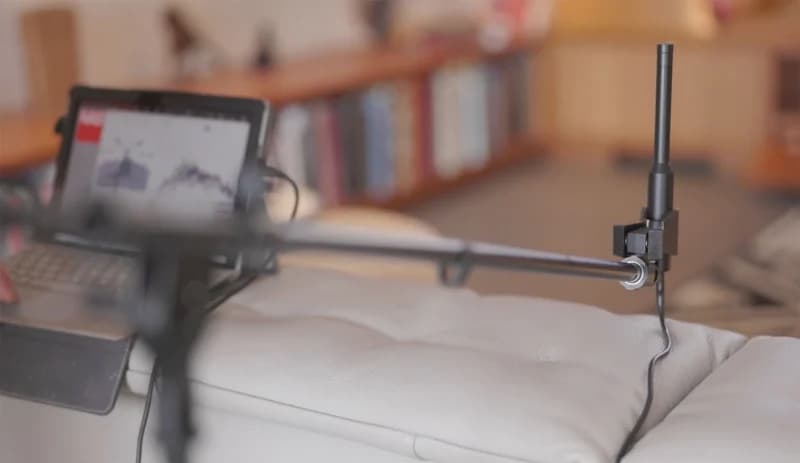
TekScene is a Dirac Live specialist. We perform professional measurement sessions using calibrated microphones and proper multi-point measurement techniques. The difference between a DIY Dirac calibration and a professional one is significant — microphone placement, target curve selection, and filter configuration all matter enormously. We ensure your Dirac Live system is tuned to deliver the best possible sound for your room and your preferences. TekScene offers professional Dirac Live calibration across South Carolina's Midlands — serving Columbia, Chapin, Lexington, Irmo, and the greater Lake Murray area.
Why Buy Dirac Through TekScene
- Professional measurement and calibration — Dirac Live is powerful but complex. We perform multi-point measurements with calibrated microphones, select appropriate target curves for your room and content preferences, and fine-tune the results until the system sounds right — not just measures right.
- Active Room Treatment (ART) specialists — ART is where Dirac Live truly sets itself apart. We configure the full MIMO speaker coordination that actively cancels room resonances — a genuine differentiator that delivers results no amount of manual EQ can match. We also handle Bass Control multi-sub integration and crossover optimization.
- Compatible hardware guidance — Dirac Live runs on specific AV receivers, processors, and dedicated hardware. We help you choose the right platform for your system and budget, ensuring full compatibility and feature access.
- An extra layer of support — When you purchase your Dirac Live license through TekScene, you get a local support partner who understands both the software and the receiver it runs on. Instead of navigating between Dirac and your AVR manufacturer, you have one point of contact who knows your entire system.
- Ongoing tuning and support — Room acoustics change with furniture, seasons, and system upgrades. Based in Chapin, SC, we’re available for recalibration sessions and adjustments whenever your setup evolves.
Frequently Asked Questions
My receiver already has room correction. Why add Dirac Live?
Because they are correcting different things. Systems like Audyssey and YPAO adjust frequency response — how loud each frequency is at your seat. Dirac Live does that too, but it also corrects the impulse response: when each frequency arrives at your ears.
That time-domain correction is what you hear. Rooms smear sound by adding reflections that arrive slightly after the direct sound, and frequency-only EQ cannot untangle that no matter how many filters it applies. Fixing timing as well as level is what tightens bass, cleans up dialogue and makes a soundstage snap into focus. If you have already run the built-in correction and felt it helped but did not transform anything, this is usually why.
Which receivers and processors support Dirac Live?
It runs on the hardware itself rather than as an add-on box, so the platform has to support it. Denon and Marantz cover it across much of their range, and it appears on NAD, StormAudio, Arcam and others, with new models added regularly.
The best way to check is Dirac's own list at dirac.com/brands. Pick your brand and it breaks the range down device by device, showing which Dirac Live tiers each model supports — so you can confirm whether your exact receiver can run Room Correction, Bass Control and ART before you commit to anything.
The one thing that list cannot tell you is what your particular unit already has. Some hardware ships with a base license included and some with none, so two owners of the same model can be starting from different places. Send us your model and what came with it, and we will work out what you already have and what it would take to get where you want.
Do I need all three Dirac licenses, or just one?
They stack, which catches people out. Room Correction is the base license and works on its own. Bass Control requires Room Correction plus a Bass Control license. ART requires all three — Room Correction, Bass Control and ART. So ART is not an alternative to the others, it sits on top of them.
What you already own matters too. Some receivers and processors ship with a basic Dirac license included, which you can then upgrade; others ship with none and every tier is a purchase. That single difference can change what a system costs to bring up to the same capability, so it is worth establishing early — before the hardware is chosen, ideally.
Dirac also sells multi-tier bundles rather than only individual licenses, which is usually the better route if you already know you want more than the base tier. And nothing is wasted if you take it in stages: start with Room Correction, add Bass Control when you add subwoofers, add ART when you want it. Tell us what your hardware came with and where you want to end up, and we will work out the cheapest path to it.
Why buy a Dirac license through TekScene instead of directly from Dirac?
You get the same software either way. What buying through us adds is a support layer that does not otherwise exist.
Dirac Live sits between two vendors: Dirac writes the software, someone else builds the receiver it runs on. When something does not behave — a license not showing up, a processor not exposing the tier you paid for, measurements that will not complete — that gap is where people lose entire evenings, with each vendor pointing at the other. Buying through us means one point of contact who knows both the software and the hardware it is running on, and who has seen the problem before.
If you are having us do the calibration anyway, it also keeps everything with one party — license, measurement and tuning together, rather than three conversations.
Does ART mean I don't need acoustic panels and bass traps?
Not quite, and it is worth being precise because ART is often described as treatment without panels.
ART works in the 20–150 Hz range, where it coordinates all your speakers to actively cancel room resonances. That is genuinely remarkable — it addresses modal problems that would otherwise need very large amounts of physical trapping, and it improves consistency between seats in a way EQ cannot.
Its benefit reaches further than that range suggests, though. Uncontrolled bass and long modal decay mask detail higher up the spectrum: energy from a note that should have stopped is still in the room while the next sound arrives, and your ear reads that as congestion rather than as a bass problem. Clean up the bottom end and the midrange gets clearer, dialogue separates from the score, and the whole presentation sounds less cluttered — even though nothing above 150 Hz has been touched. A lot of what people call muddiness is really a bass problem in disguise.
What ART cannot do is act on the room's own behavior higher up: first reflections off side walls and ceiling, flutter echo, an overly live room. Those still call for absorption and diffusion. The honest way to think about it is that ART solves the low-frequency problems panels struggle with, panels solve the reflection problems ART cannot reach, and each makes the other more effective.
Can I run the Dirac calibration myself?
You can — the software is designed to be usable, and plenty of people run it themselves. Whether you get the full benefit is a different question.
The results depend heavily on decisions the software does not make for you: where the microphone goes for each measurement and how that pattern maps to how you actually use the room, which target curve suits your system and taste, how much correction to apply and where to stop. Measuring the same room two different ways can produce noticeably different results, and it is entirely possible to run a technically valid calibration that sounds worse than no correction.
We use calibrated microphones and proper multi-point technique, then tune the result by listening rather than stopping at the graph.
Do I need multiple subwoofers to benefit from Bass Control?
No, though multiple subs are where it does its most striking work. With one subwoofer, Bass Control still manages the handoff between sub and speakers and corrects low-frequency room behavior.
With two or more, it does something manual setup struggles to match: time-aligning and level-matching every sub and treating them as a coordinated system rather than several boxes fighting each other. That is what evens out bass from seat to seat, which is usually the real complaint in a multi-row room — not that bass is missing, but that it is wrong in some seats and boomy in others.
Will my system need recalibrating later?
Occasionally, yes. A calibration reflects the room as it was on the day it was measured. Adding or moving speakers changes it, and so does the room itself — new furniture, rugs, heavy curtains, a different seating layout.
Day-to-day changes do not matter, and you do not need to re-run it seasonally. But after a system change or a real change to the room, a fresh measurement is worth doing — and some of the groundwork from the first session carries over, since your room, your speaker placement and the target curve that suited you are already known.
Interested in Dirac Live? Let’s Talk About Your Project.
Whether you’re adding room correction to an existing system or building a new theater from scratch, we’ll help you get the most out of Dirac Live.